Era Pickleball pickleball center: Training Ground for Champions
The moment you walk into Era Pickleball, you feel the difference between a gym that treats players as numbers and a training ground that treats them as growing athletes. The center is not just a court with a timer and fluorescent lights; it’s a living ecosystem designed to translate hours on the court into tangible results. From private coaching to state of the art court rental and a culture that values precision over bravado, Era Pickleball blends technique, mindset, and logistics into a coherent path for players who want to move beyond good to great.
What sets this place apart begins with the people. Coaches carry scars from late summer tournaments and injuries that taught them what it takes to stay sharp across a season. They bring a mix of professional competition experience and practical coaching craft. They know when to push, when to pivot, and how to talk a nervous player through a high leverage moment on the court. There’s a quiet confidence that you don’t hear in every gym, the sense that every drill has a clear purpose and every match is a chance to test it in real time.
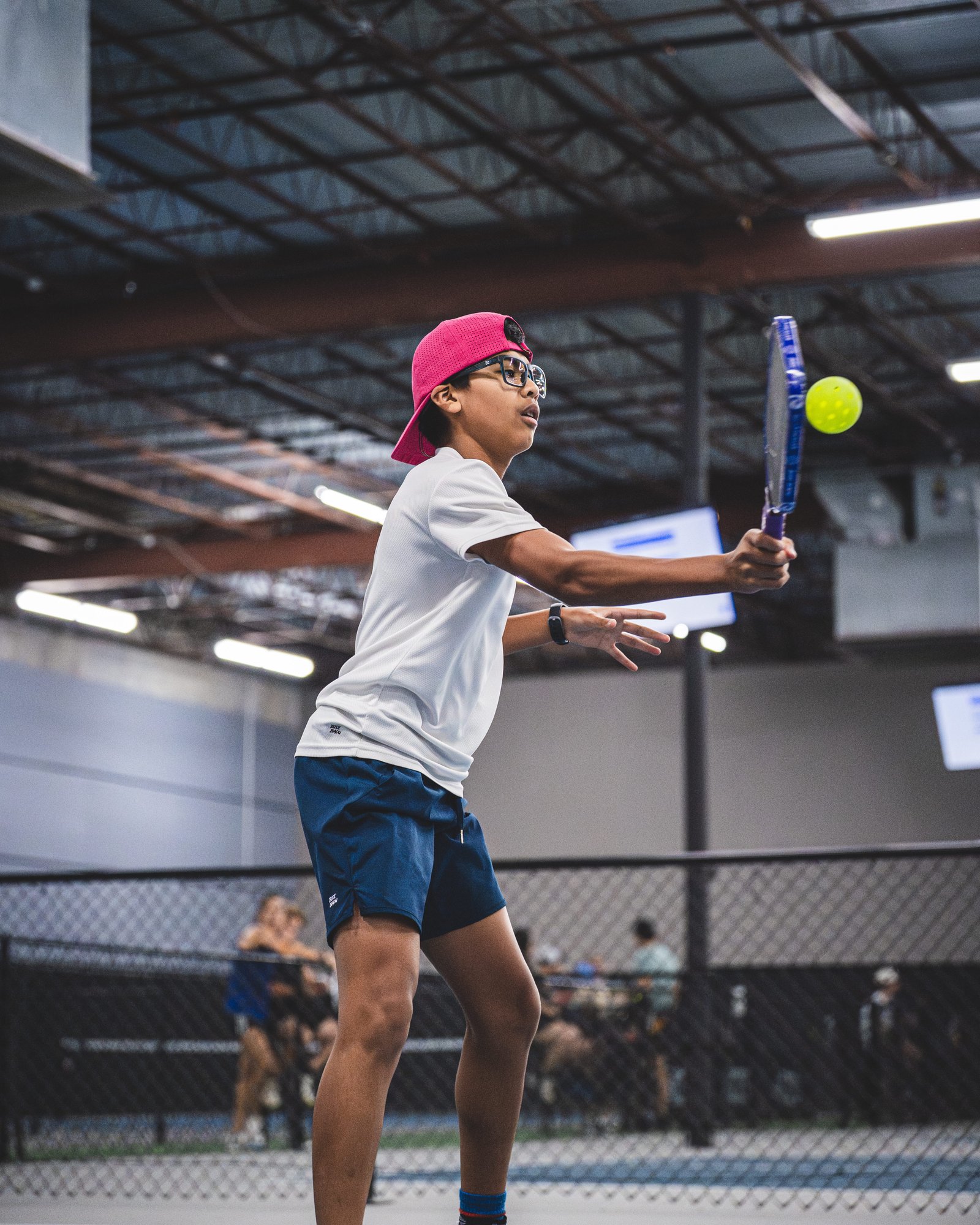
The physical footprint of the center reinforces that message. You’ll find clean practice areas with well maintained surfaces, but the real value sits in the attention paid to lighting, ball trajectory, and footwork corridors that guide movement like a map. The courts are designed to minimize elbow and shoulder strain through calibrated net heights pickleball courts near me and court dimensions that reflect professional standards. It’s a space that invites athletes to focus, not to stumble through a maze of flickering bulbs or inconsistent bounce. In this environment, commitment earns repetition, and repetition earns muscle memory that sticks.
For players who are in the middle of a season, the training philosophy at Era Pickleball is relentlessly practical. It begins with a detailed assessment, not a generic fit. They track movement patterns, shot selection tendencies, and how players respond to pressure in longer rallies. This isn’t about chasing flash; it’s about building a toolkit that stays sharp when fatigue settles in and the scoreboard becomes a test of nerve as much as dexterity. The staff understands that every athlete has a different rhythm, and they tailor sessions to match that tempo without sacrificing the core demands of high level play.
The academy ethos extends beyond the court. It seeps into the way players prepare, recover, and review. You’ll hear talks about nutrition timing, sleep hygiene, and the discipline of a post practice routine that makes a tangible difference in next-day energy. There’s a rhythm of disciplined routines that repeats across athletes at varied stages of development. When a junior player watches a seasoned pro break down a rally, they absorb a model of composure that is as important as the rally itself. This is where technique and temperament begin to fuse into a single, durable habit.
The center’s reach extends into court rental and convenient access for teams, clubs, and independent players who want predictable scheduling. If you’re running a local league or organizing a weekend tournament, the era pickleball center can be your home base. It’s not merely about availability; it’s about reliable, high quality spaces that keep play moving and practices productive. The logistics side matters as much as the technical coaching because a smooth experience multiplies the value of every minute you spend on the court. When a court is ready, a player can shift from warming up to a focused drill to a simulated match without friction.
A short tour reveals that Era Pickleball also cares deeply about community. The center hosts clinics and mini camps that draw players from nearby clubs and schools, weaving a network of practice partners across age ranges and skill levels. The value of that ecosystem becomes clear when a teen player shares a breakout moment with a peer who has a complementary skill set. The sense of being part of something larger than one person’s improvement is often the key that keeps early career players from burnout. It’s not just about winning tournaments, it’s about sustaining curiosity and purpose over many seasons.
From the perspective of a parent watching a child progress, the affordability and clarity of pricing at Era Pickleball matter. The center offers transparent court rental options, structured coaching packages, and flexible scheduling that respects the realities of school and practice calendars. The team communicates plainly about what’s included in each package, what kind of feedback to expect, and how progress will be measured over time. In the best moments, you see a family plan come together on a Thursday evening—the kid on one side of the net, a mentor on the other, both working toward the same goal with trust as the unspoken currency.
The core value proposition of Era Pickleball centers on training that compounds. In the language of the sport, a well designed practice translates into more than a single winning shot; it becomes an efficient, repeatable system for creating options on the court. For players who want to recreate the feel of major tournaments in daily practice, the center provides a framework for deliberate practice. You start with fundamentals and gradually layer in game sense, situational drills, and pressure tests that mimic high stakes play. The pace adjusts with you, not against you, so players can develop confidence without feeling overwhelmed.
One of the most compelling aspects of the academy is its emphasis on feedback loops. Coaches watch video with players, annotate clips, and point to concrete adjustments. The language is precise rather than airy. “Shift your weight into your back foot on drive serves,” a coach might say, “and stay tall through contact to maintain control.” The effect is tangible: players start to hear the same cues in matches, and moves become more predictable under pressure. The process is iterative, but the gains accumulate in predictable ways when practice structure aligns with competition cycles.
In discussing the long tail of outcomes, it’s worth noting how Era Pickleball handles injury risk and longevity. The center integrates mobility work, load management, and progressive return protocols into regular programming. If a player takes a strain, the response isn’t a sprint back to full intensity but a careful recalibration of training stress and volume. This is not about protection at all costs; it is about sustaining peak performance across a season, balancing ambition with the awareness that a career can be long if the basics stay intact. The staff speaks plainly about risks, offering protocols that players can rely on when a tournament weeks are tight and the calendar fills up.
The experience of becoming a stronger pickleball player at Era Pickleball is as much about culture as it is about technique. The center fosters an environment where questions are welcome and progress is measured in both minutes and milestones. A junior practice might look like a sequence of micro drills that scaffold up to a controlled rally, while a high performance session for adults can resemble a chess match with rhythm and tempo shifting in real time. Coaches encourage players to narrate their own decision processes aloud during drills, a habit that builds awareness and confidence simultaneously.
For those who care about concrete outcomes, the track record speaks softly but clearly. There are players who arrive with a plan to qualify for regional circuits and leave with a better understanding of shot selection, court positioning, and mental preparation. The path isn’t a straight line; it’s a curated journey that recognizes the irregularities of development. Some weeks are all about footwork and balance, others zero in on attacking patterns or defending against heavy serves. The center respects that different players climb at different speeds, and it provides a menu of options that lets each athlete find their own ascent.
A final point about the Era Pickleball experience lies in the practical details you notice only after you’ve spent time there. The front desk is efficient, the app for booking is intuitive, and the gear in the pro shop tends to be reliable and well curated. Court surfaces show consistent bounce, nets sit at the correct height, and the lighting avoids glare on times when you’re chasing a shot along the baseline. These practical touches reduce friction, which is a surprisingly large part of why players improve. It’s simple to say, but incredibly valuable to feel.
If you’re evaluating where to place your energy and your money in your pickleball journey, Era Pickleball Center deserves a hard look. The blend of coaching depth, court rental reliability, and a culture that prizes purposeful practice creates a rare environment where talent can flourish with structure and support. It’s not a magical solution to every challenge a player faces, but it is a powerful catalyst for consistent improvement. In a sport that rewards repeatable precision and smart decision making, having a dedicated training home matters more than most players realize.
The path to mastery is rarely linear, and that truth applies here with equal weight. Some weeks bring tangible breakthroughs, others demand patience as small and steady gains accumulate. The most successful athletes at Era Pickleball learn to appreciate both outcomes: the sudden flash of a perfect cross court and the quiet discipline of a well timed reset in the middle of a tense rally. They know that the real competition happens not solely on the scoreboard, but in the daily choice to show up trained, focused, and ready to learn.
Below, a snapshot of what a typical engagement with Era Pickleball might look like for different athletes. This is not a one size fits all map, but rather a sense of how the center translates coaching philosophy into daily practice, week after week, season after season.
A practical sense of progress assignment can begin with a single session. A coach identifies a few high impact adjustments—perhaps improving balance on the drive, refining the placement of a third shot drop, or sharpening the transition from defense to offense. The player completes the drills, records a short reflection, and then returns with a slightly different intention the next time. It’s a habit loop built on accountability, not guilt, that keeps growth moving forward even when matches don’t go as planned.
The center also fosters peer learning. Watching seasoned players perform a difficult rally can spark a similar pursuit in a developing athlete. Seeing a cross court winner set up by a patient, patient sequence gives the younger player a model to emulate. These moments are often the most influential, because they demonstrate that talent alone isn’t enough; discipline and recovery shape outcomes as much as raw speed.
For teams and clubs, the center offers more than a rental space. It provides a hub for structured practice blocks, coaching support for team drills, and a framework for refining team dynamics. The ability to schedule routine sessions in a single, reliable facility reduces the friction that used to come with coordinating multiple venues. A team that can practice together regularly tends to perform better in matches that matter, and that consistency is itself a competitive advantage.
In the broader ecosystem, Era Pickleball functions as a connecting tissue between players at different levels. It’s a place where a high school player can grind through a summer program and a regional player can test a new strategy in a controlled environment before a major event. The center’s approach is not about producing a single breakout star; it’s about nurturing depth within the sport—creating more players who can hold their own in tough matches, and who lift others as they climb.
The design of the coaching staff’s time is also noteworthy. There is a careful balance between supervision and freedom. Lead coaches set the tone and calibrate the curriculum, but there’s room for assistants to lead on specific drills or to bring in their own expertise, whether that’s on kitchen line strategy, service return patterns, or tactical off speed play. Players benefit from this multi-eyed approach, gaining exposure to a range of problem-solving styles without feeling pulled in conflicting directions.
If you’re considering whether an investment in court rental at Era Pickleball is right for you, here are a few guiding thoughts. First, have a clear objective for each session. Whether the aim is to tighten your serve, improve your drop shot consistency, or experiment with a new forehand approach, knowing what success looks like makes every minute more productive. Second, align with a coach whose communication style matches yours. Some coaches emphasize quick feedback, others lean into slow, deliberate technique work. The best partnerships respect both tempos. Finally, treat the practice space as a lab. Track your metrics, be honest with your own data, and use that information to shape your next week’s plan. The gym does not lie; your choices do.
In the end, Era Pickleball pickleball center is more than a place to play. It is a facility designed to help players of all ages translate potential into performance. It offers the structure that modern athletes need without sacrificing the joy and flow that make pickleball a compelling sport. For families, coaches, and players looking to anchor their development in a proven framework, it stands as a credible option among training centers and pickleball academies. It is, in short, a practical path toward a higher peak.
What follows are practical snapshots that might help you decide how to engage with the Era Pickleball ecosystem. The first is about the academy itself, the second about the rental and facility options, and the third about ongoing training philosophy versus short term gains. Each thread ties back to a central idea: a durable, repeatable process for getting better at a fast paced, increasingly popular sport.
In the era of crowded schedules and evolving competition formats, a place like this feels almost overdue. The center’s facilities are robust, and its coaching is thoughtful enough to satisfy serious players who care about the mechanics of improvement. It’s not enough to be able to win a local match; the goal is to develop the kind of game that holds up when the pressure rises and the arena seats fill. That’s the standard Era Pickleball sets, and it’s a standard worth pursuing if you’re serious about performance.
Two pathways stand out for players who want to leverage the center’s strengths. First is the training curriculum that blends technique work with situational play. This is where you learn to decode a rally as it unfolds, anticipate the other player’s intent, and maintain balance under fatigue. Second is the court rental model, which offers flexible access to high quality surfaces and reliable scheduling. For team practices, private sessions, or family play sessions, the logistics are straightforward and dependable.
It’s rare to encounter a facility that can host a weekend tournament and also serve as a day-to-day training home with equal effectiveness. Era Pickleball straddles that line, offering both a performance oriented program and a welcoming, well organized space for recreational players to improve. The center’s reputation rests on that balance and on the tangible improvements players report after sustained engagement. It’s the kind of place where you can measure progress in small, meaningful steps—improved footwork, cleaner contact on contact points, better shot selection under pressure—and watch those steps accumulate across a season.
If you are curious about the specifics of what makes the training work, consider the following themes that recur across the center’s coaching philosophy. The first is precision under pressure. It’s not enough to swing hard; you must swing with purpose within the constraints of the rally. The second is the art of recovery. Short, crisp resets and intentional breath control keep you from being overwhelmed when a bad sequence unfolds. The third is adaptability. Strategies that work in one month may require adjustment the next, and a robust practice plan will accommodate those shifts without losing shape. The fourth is accountability. Coaches and players share clear expectations about performance, whether it’s the quality of a drill, the tone of a practice, or the pace of daily improvement.
As you can tell, Era Pickleball center is more than a facility. It’s a partner in the long, winding road of athletic development. The focus on consistent, sustainable growth rather than quick wins makes it appealing to families and serious athletes alike. There is a pragmatism here that respects the realities of time, budget, and competing commitments, while still demanding discipline and serious effort on the court. It’s an environment where talent has room to mature, where strategy is valued as much as speed, and where practice turns into performance.
For readers weighing their options, the question often comes down to whether the center’s offerings align with personal or team goals. If you’re chasing a learning culture that prioritizes structure, measurable improvement, and reliable access to top tier facilities, Era Pickleball is worth a serious look. If you want a fast, flashy magic bullet, you may be disappointed. The center does not promise miracles; it promises a rigorous path built on daily habits, honest feedback, and a commitment to sustained development.
In the final analysis, what makes Era Pickleball unique is the degree of coherence between its coaching philosophy, its facility design, and its scheduling systems. The result is a place where players can practice with clarity, coaches can measure progress with confidence, and families can plan around a reasonable, transparent model. For anyone who wants to see steady improvement in a sport that rewards precision, resilience, and smart decision making, the center is worth visiting, worth booking, and worth staying with through a season and beyond.
Two notes that may help in decision making. First, if you’re new to the ecosystem, start with a short, structured introduction package. It allows you to sample coaching style, court quality, and the overall tempo of practices without a heavy upfront commitment. Second, look at the schedule over several weeks to understand how the center handles peak periods. If you’re balancing tournaments with practice, you want a plan that scales without burning you out. The Era Pickleball model gives you that kind of scalability, provided you approach it with clear goals and a willingness to participate in the learning process.
In sum, Era Pickleball pickleball center stands out not because it claims to reinvent the sport, but because it offers a thoughtful, evidence oriented approach to practice. It respects the complexity of the game while giving players the structure they need to manage that complexity. For athletes who want a durable improvement arc rather than a momentary win, it represents a meaningful option among pickleball academies and training centers. The result is a community that grows together, day by day, rally by rally, toward championships earned through discipline, patience, and smart effort. If that aligns with your ambitions, the center awaits your next visit, your next drill, and your next decisive moment on the court.
- Era Pickleball academy and center offer a comprehensive path for serious players seeking durable improvement through structured practice and high quality court access.
- The coaching team blends competitive experience with practical teaching, focusing on precise technique, smart shot selection, and mental readiness.
- Court rental options provide reliable scheduling, clean surfaces, and consistent bounce, which removes friction during training blocks and scrimmages.
- The training philosophy emphasizes deliberate practice, measurable progress, and adaptive planning across a season.
- The overall ecosystem connects players, clubs, and families through clinics, camps, and structured practice blocks that reinforce sustained engagement with the sport.